
10/25/50/100G Future Proof Upgrades
Quality That Scales With Speed


Ensure splice budgets hold as speeds rise over longer spans of fibre.
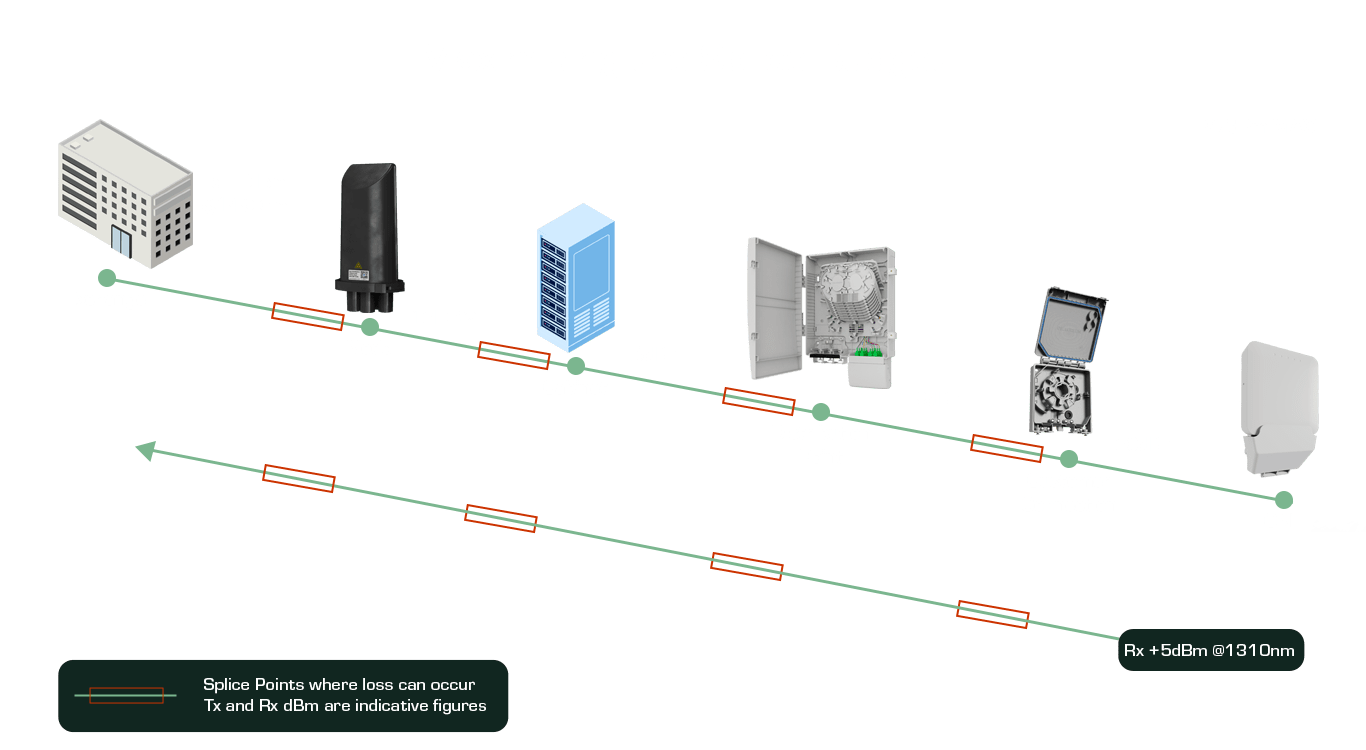
As Network Bandwidth increases over time, the Splice budget becomes more critical to a carrier. This means that splice quality becomes more relevant. A poor splice on 10G may function fine, but as speeds increase, the quality issues intensify, and the circuit may break down.

Build it once. Build it right. Build it for the future.
Fibre networks are entering a new era of bandwidth demand. As operators transition from GPON to XGS-PON and towards 25G, 50G, and 100G PON, the performance of the passive optical network (ODN) has become a strategic factor in determining service capability, upgrade feasibility, and long-term operating costs.
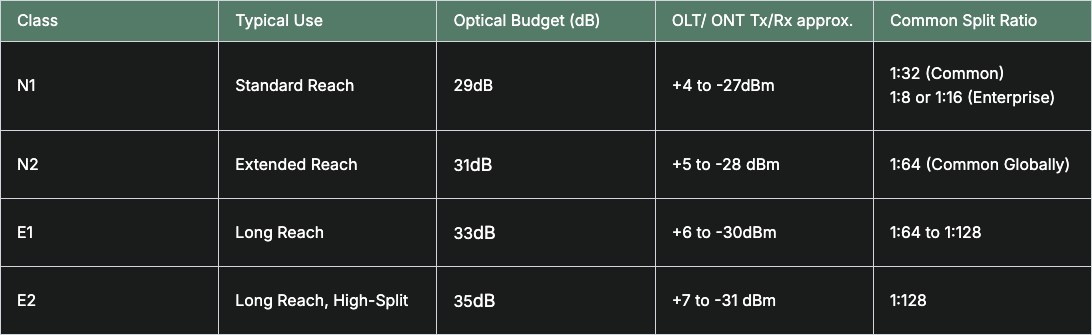
Across all optical budget classes—N1, N2, E1, and E2—the single largest controllable factor affecting network performance is splice quality. Poor splices increase attenuation, degrade reflectance, reduce split ratio flexibility, and consume critical upgrade margin. While budget classes define the maximum allowable loss, they do not create tolerance for poor workmanship. In fact, as bit-rates increase, optical systems become less tolerant of high loss and reflection, not more.
For operators deploying 1:32 and 1:64 split ratios under N1 and N2 budgets, margin is already tightly constrained. Even small splice defects accumulate to create hidden risk. Under higher classes (E1/E2), where long reach and high splits are required, consistency and quality remain essential—because higher budgets compensate for distance, not poor construction.
The Splice Fault Detector was designed to address this challenge directly. It provides real-time detection of splice faults, ensures consistently low-loss, low-reflectance splicing, and protects the available optical margin that future upgrades depend on. By preventing poor splices from entering the network, it reduces rework, cuts OPEX, enhances service reliability, and preserves upgrade paths to next-generation PON technologies.

Why Splice Quality Matters to an Optical Budget
Take the Typical Path Loss over 20km PON with 1×64 Split Ratio and about 1dB of Connector and Adapter Loss
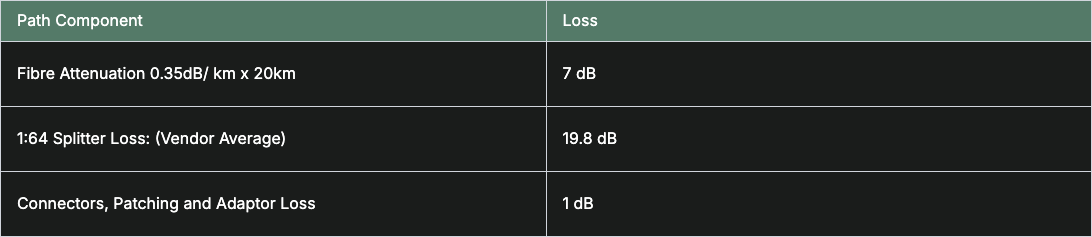

N2 Optical Budget (31 dB)

Splice Allowance from the Remaining 3.2dB Margin:
• At 0.05 dB per splice → ~64 splices
• At 0.10 dB per splice → ~32 splices
• At 0.20 dB per splice → ~16 splices

N1 Optical Budget (29 dB)

Splice Allowance from the Remaining 1.2 dB Margin:
• At 0.05 dB per splice → ~24 splices
• At 0.10 dB per splice → ~12 splices
• At 0.20 dB per splice → ~6 splices

The Business Case is Clear:
Better splices drive higher network performance today.
High-quality splicing protects upgrade paths tomorrow.
Consistent splice quality reduces operating cost over the network’s lifetime.
Future-Proof Your Fibre Network
Guarantee long-term reliability and compliance as you transition to higher bandwidths.
